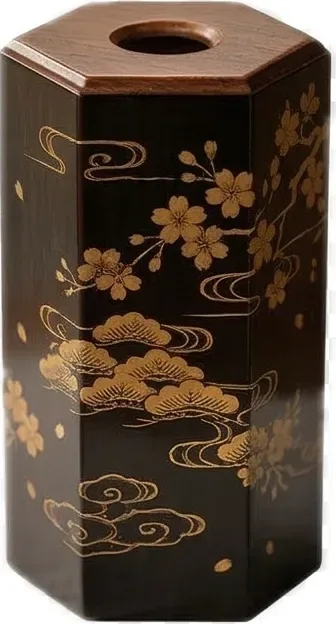
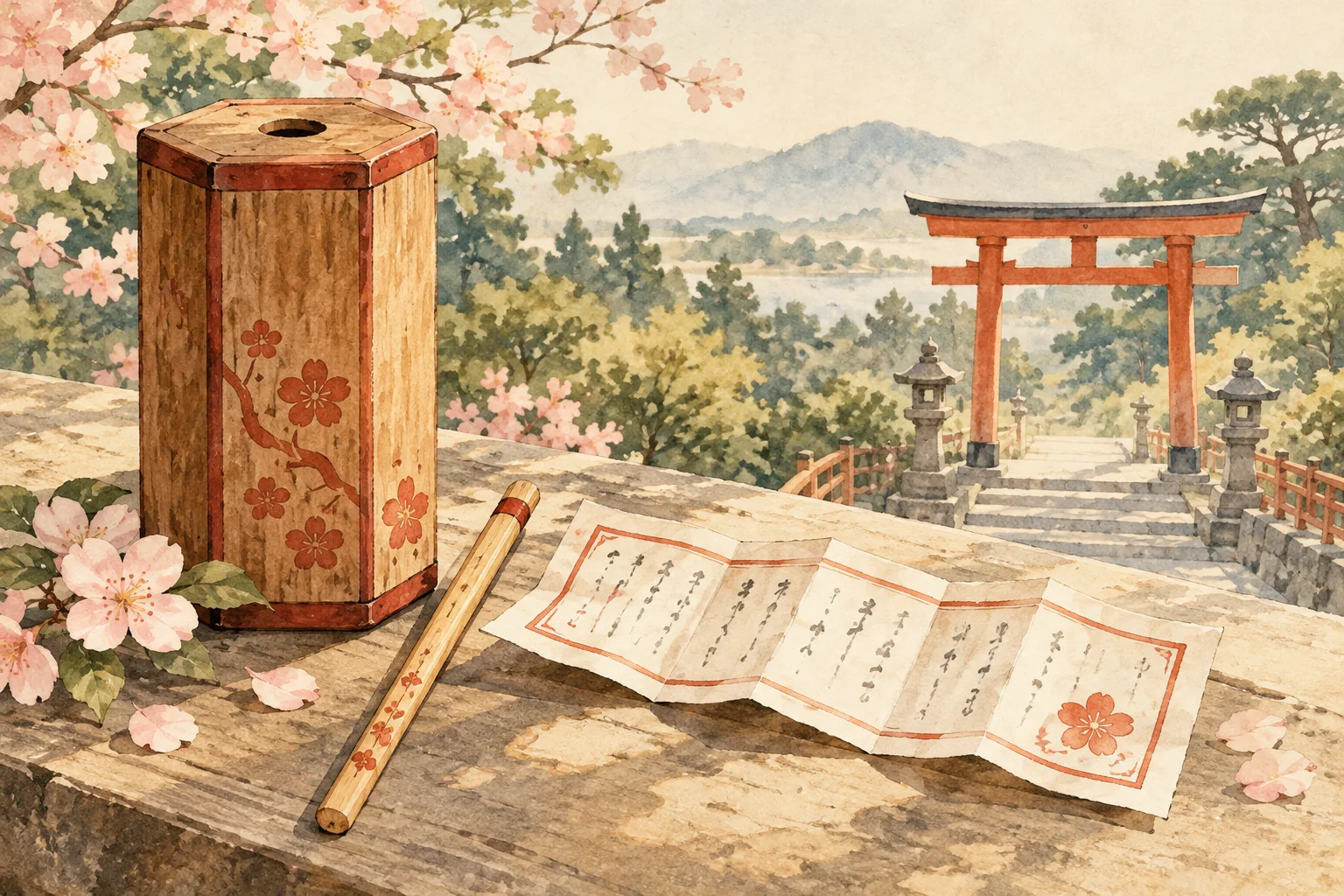
Omikuji meanings: daikichi, kyo and the words on your fortune
Read Japanese omikuji ranks and common fortune-slip words. Find out why kichi can change position, what kyo means, and how this online game differs.
Take a quiet moment. Make a wish, shake the wooden box, and discover your fortune.
Your fortune is waiting.
Free to draw. Try again anytime.
Shake the box. One stick holds your fortune.
You can draw with images on this device.
Read Japanese omikuji ranks and common fortune-slip words. Find out why kichi can change position, what kyo means, and how this online game differs.
A practical omikuji guide: find the fee, shake out one stick, match the number and read your slip. Learn when to clap and where to tie a fortune.
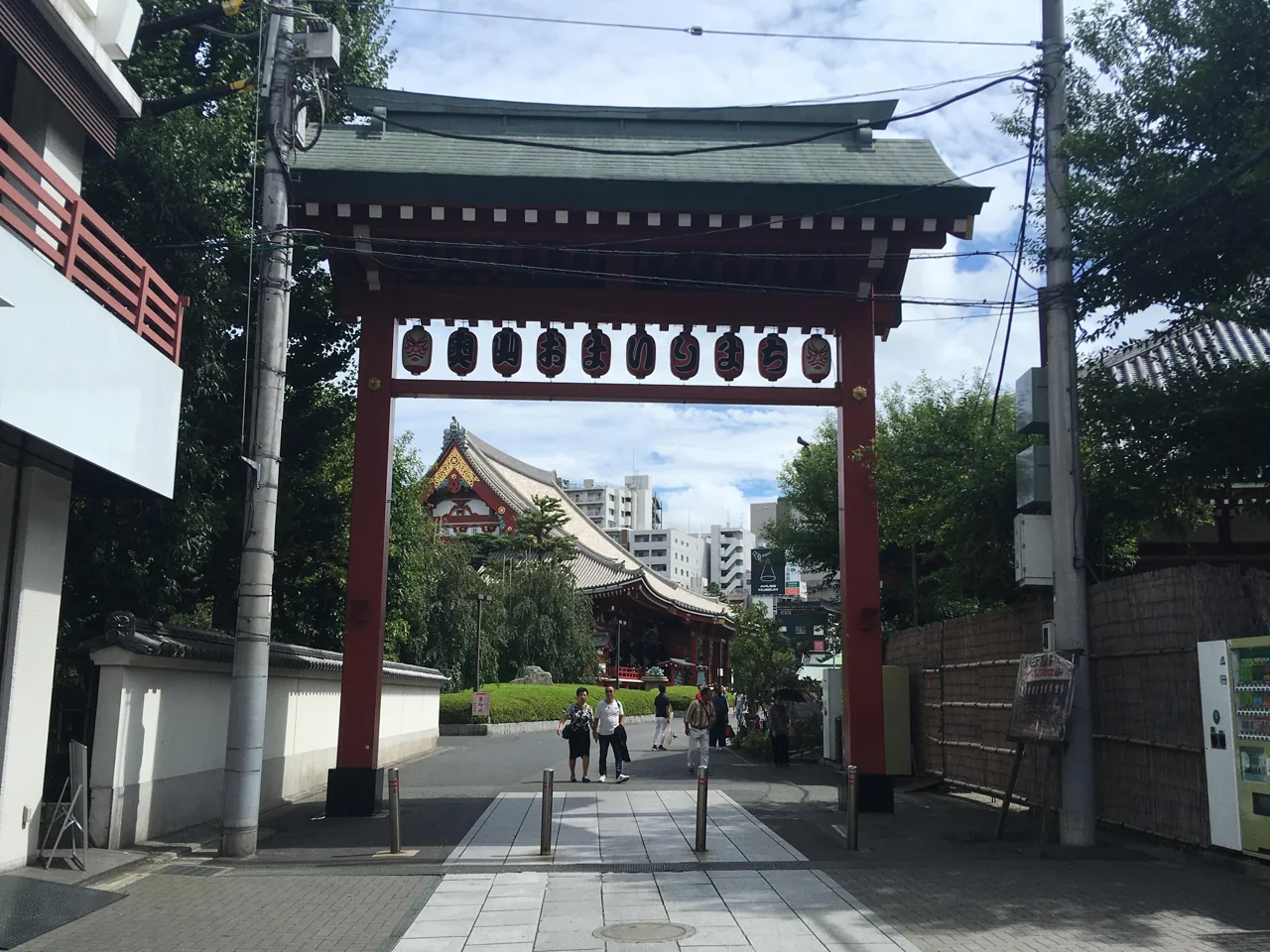
Compare a Buddhist temple, poem-based fortunes and a Shinto shrine: three distinct ways to explore omikuji and wish-making in Tokyo and Kyoto.
Omikuji are traditional Japanese fortune-telling slips found at shrines and temples. They serve as messages from the gods, offering guidance on your future and daily life.
Leave a little offeringRanks vary between shrines and temples. This game also includes a rare Daidaikichi fortune.