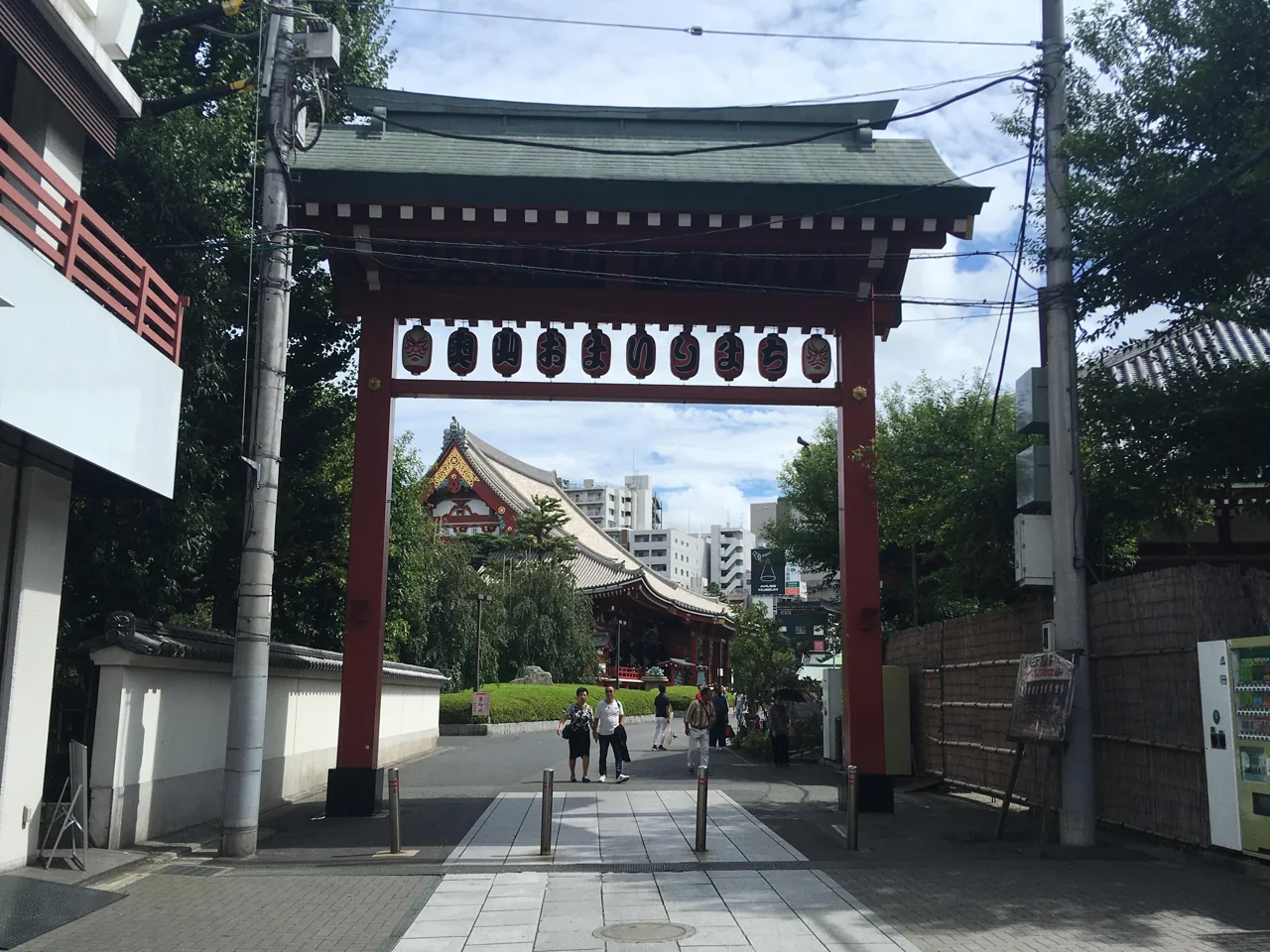
Senso-ji, Meiji Jingu and Fushimi Inari are not interchangeable stops for the same fortune. One is a Buddhist temple, one is known for poem-based omikuji, and one introduces you to Inari worship and a different wish-making tradition. Choose according to the experience you want, rather than a claim that one place has the best luck.
Senso-ji, Asakusa: a temple with English omikuji
Senso-ji's official introduction identifies it as Tokyo's oldest temple, dedicated to Kannon. It is a Buddhist temple, so do not confuse it with neighbouring Asakusa Shrine or apply a shrine's clapping routine to worship in the main hall.
JNTO's omikuji guide lists English-language omikuji at Senso-ji. This makes Asakusa a practical choice if you want to compare Japanese fortune words with an English explanation. Check the available slips and instructions at the counter when you visit. The photograph on this page shows the main hall, not the current omikuji counter or today's crowd conditions.
Meiji Jingu, Tokyo: a poem instead of a luck score
For a different approach, read about Meiji Jingu's waka-based omikuji. The shrine selected thirty poems by Emperor Meiji and Empress Shoken, with English translations. Its historical glossary states that these fortunes, called Omigokoro, do not label the result as good or bad luck.
This is a useful visit if you are more interested in reflecting on a passage than collecting a daikichi result. The absence of a rank is part of the format, not a missing translation. These are the shrine's own texts: our online game does not reproduce them or provide an official Meiji Jingu draw.
Fushimi Inari Taisha, Kyoto: understand the wish-making setting
Fushimi Inari Taisha is a Shinto shrine associated with prayers including harvests and business prosperity. The Senbon Torii route is a reason to look beyond the souvenir image and understand the sacred setting while you walk.
At Okusha Hohaisho, the shrine describes the Omokaruishi stone lanterns. The custom involves making a wish and comparing a lifted stone's weight with your expectation. That is a stone-based wish custom, not another name for a paper omikuji or a numerical measurement of your future. Follow local instructions rather than copying a pose or lifting an unmarked stone elsewhere.
Plan around the actual visit
For a paper fortune with English guidance, start your research with Senso-ji. For a poem without a rank, look at Meiji Jingu. For Inari worship and the stone-lantern custom, read Fushimi Inari's visitor information. These choices concern cultural differences, not an objective ranking of spiritual power.
Opening arrangements, counter service and languages can change. Use the linked official sites when planning the day, especially if the fortune counter is the reason for your visit. While you plan, the online draw offers a separate way to learn the vocabulary and compare the categories on a fortune slip.