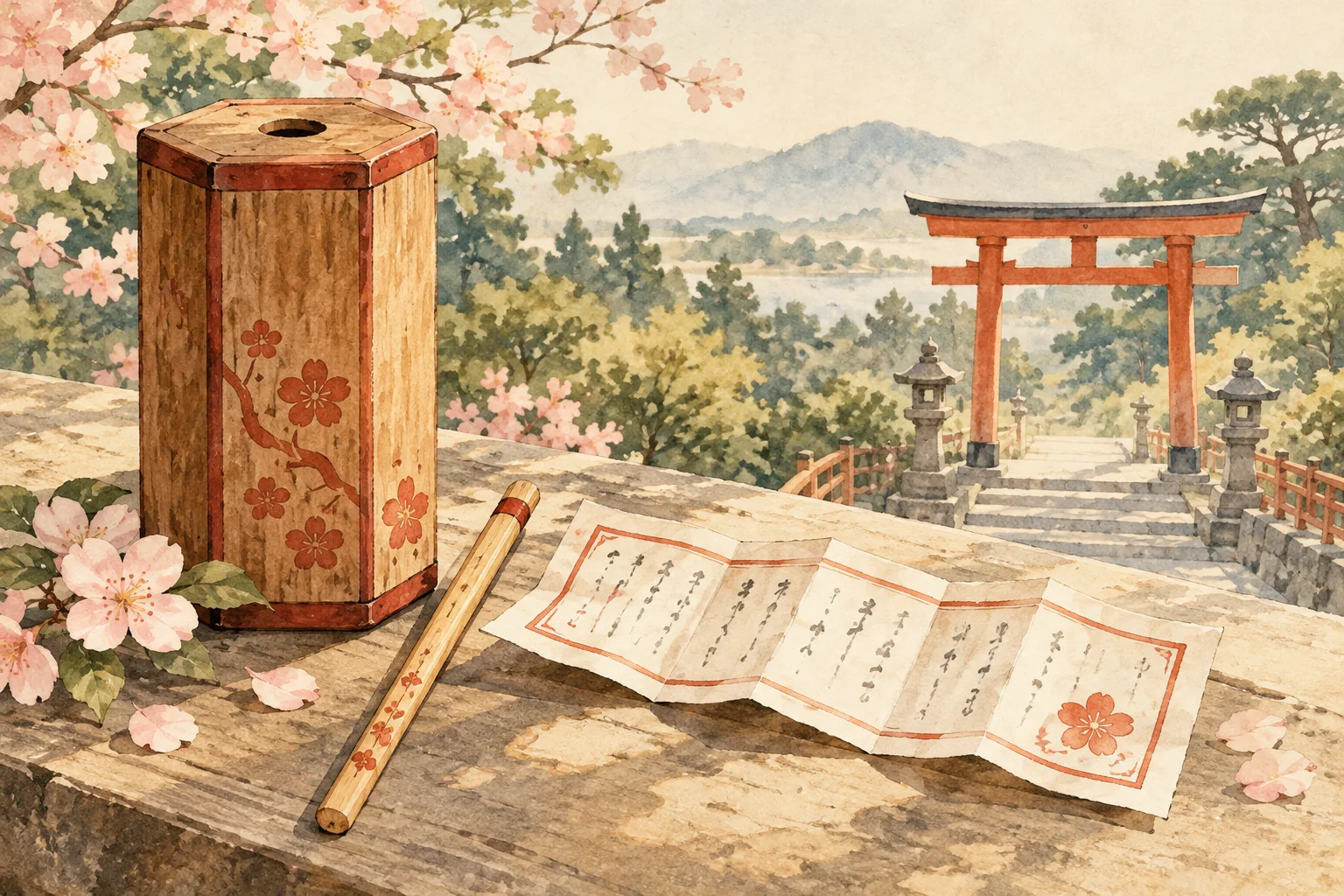
The stick that comes out of an omikuji box is usually a number, not the fortune itself. You use that number to receive the matching paper. Knowing this before you start makes a self-service counter much less puzzling.
Find out which kind of draw is in front of you
The Japan National Tourism Organization's guide describes both stick boxes and other formats, including mechanical draws. Some places hand you a slip directly; others use small containers or dispensers. Check the posted instructions and fee at the actual counter. There is no single price or mechanism that applies everywhere.
A numbered box is one format, not a requirement of the tradition. If there are no sticks or drawers, do not look for a missing stage: follow the process displayed at that location.
Using a numbered stick box
- Read the instructions, check which language is available and make the indicated payment or offering.
- Shake the container as directed and let one stick emerge through the opening.
- Note the number. Look for the matching drawer, or show the stick to the attendant if that is how the counter operates.
- Take one corresponding slip. Return the stick to its container as instructed so the next visitor can use it.
- Step away from the counter to read. Keep the drawers and walking route clear for other visitors.
On a Japanese-numbered stick, 十 is ten, 二十 is twenty and 二十一 is twenty-one. The number identifies a slip in that particular system; it is not a score out of one hundred and does not by itself tell you whether the fortune is favourable.
Shrine and temple prayer are different
Omikuji can be found at Shinto shrines and Buddhist temples. Do not assume the same prayer gesture fits both. Meiji Jingu's own instructions use two bows, two claps and a final bow. At Buddhist Senso-ji, the official introduction describes putting the hands together in prayer. Do not import the shrine's clapping sequence into a temple visit; local signs and staff take priority.
Take it home or tie it where permitted
The Association of Shinto Shrines describes both tying an omikuji and taking it home. Neither every bad slip nor every good slip has one mandatory treatment across Japan. If you leave yours, use the designated rack and tie gently. A tree full of paper in a photograph is not permission to tie something to any tree you see.
You can practise the shake-and-reveal idea in this free online game before a trip. The digital result is an independent entertainment experience: it is not the numbered slip or ritual of the place you later visit.